Learn
Roof Claim Denied? 7 Common Reasons and What to Do Next
A denial letter isn't the end of the road — it's the start of a process. These are the seven reasons roof claims get denied most often, and what you can realistically do about each one.
Before You React, Read the Letter Twice
A denial letter is a formal document, and like most formal documents, the important part hides in the middle. The letter will cite a policy provision or a factual finding — sometimes both. Your first job is to identify exactly which reason (or reasons) the carrier is using, in their own words, because every response you make has to address that reason, not the one you assumed.
Also note the date on the letter. Denials typically come with deadlines for appeal, reinspection requests, or further documentation, and those clocks start from the letter's date. Mark every deadline on a calendar immediately.
Finally, take a breath. A denial is the carrier's current position, not a final verdict from a court. Many denied claims get reconsidered, re-inspected, or resolved through further process — but only when the homeowner responds with documentation and persistence rather than silence. What follows are the seven denial reasons you'll see most often, why carriers use them, and what to check for each.
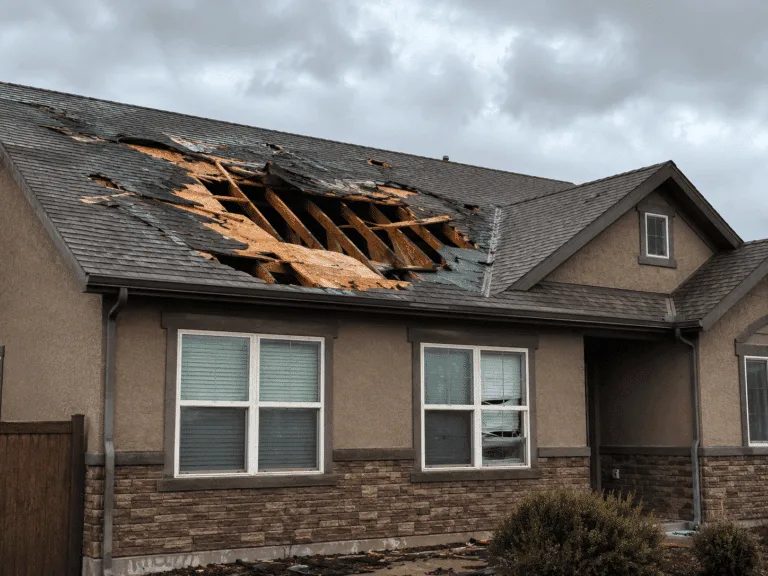
The 7 Most Common Denial Reasons
1. Wear and tear / age
Carriers frequently deny claims by concluding the roof's condition is long-term deterioration rather than sudden storm damage. This is one of the most common denial reasons on older roofs. What to check: gather evidence of a specific storm event — dated photos of hail on the ground, weather service reports, news coverage, neighbors' approved claims from the same storm. The distinction the carrier is drawing is "sudden and accidental" versus "gradual," so your response should connect the damage to a date, not just show that damage exists. Dated photographs of the damage itself help here too: fresh hail hits look different from aged shingles, and close-ups can show that.
2. No storm event on record
Sometimes the denial says no qualifying storm occurred on the date of loss — the carrier's weather data doesn't support wind or hail at your address. What to check: your date of loss might be wrong, or the storm may have been more localized than the carrier's data suggests. Look up the weather history for your ZIP code around the date, check with neighbors about when they noticed damage, and look at whether nearby homes have approved claims from a nearby date. If the date is off, correcting the date of loss can be simpler than fighting the denial. Just be accurate — don't pick a dramatic storm date that doesn't match your damage.
3. Damage below the deductible
This one is math, not malice: the adjuster agrees there's storm damage but prices the repair below your deductible, so no payment is owed. It's especially common with high wind/hail deductibles (often a percentage of the dwelling coverage rather than a flat amount). What to check: read the estimate line by line — our guide to reading your estimate shows how — and look for missing items. Ice and water shield, drip edge, flashing replacement, decking, and code upgrades are the lines most often left out of a first estimate, and adding legitimate missed items can move the total past the deductible. This is also where a contractor's supplement often changes the outcome.
4. Improper installation or pre-existing damage
The carrier may claim the problem comes from how the roof was installed — or was installed wrong — rather than from a covered storm. Pre-existing damage from an earlier, unclaimed event can get the same treatment. What to check: if you have records from the original installation (contractor name, date, shingle type), gather them. If a reputable contractor can document that the installation meets manufacturer specs and the damage pattern matches storm impact rather than installation failure, that documentation carries weight. Be honest with yourself here, too: if a prior storm damaged the roof and no claim was filed then, the current carrier may have a factual point, and the conversation shifts to what the current storm added.
5. Cosmetic-only finding
With hail especially, carriers sometimes agree the roof was hit but classify the damage as cosmetic — affecting appearance but not the roof's function or lifespan — and deny under a cosmetic-damage exclusion. Many policies have explicit cosmetic exclusions for certain roofing materials. What to check: read your policy for cosmetic damage language and note which materials it applies to. Then look at the actual damage: granule loss exposing the shingle mat, fractured shingles, or bruising that breaks through the surface are functional issues, not cosmetic ones. Close-up photos with a scale reference make the difference between "looks fine from the driveway" and "the mat is exposed." If the policy has no cosmetic exclusion for your roofing material, that matters too — the carrier can't apply an exclusion that isn't in the contract.
6. Missed deadlines or late notice
Policies require prompt notice of a loss, and many set hard deadlines for filing, documenting, or completing repairs. A claim filed long after the storm — or a supplement submitted after the policy's deadline — can be denied on timeliness alone. What to check: the letter should cite the specific provision and the specific missed date. Verify both: was notice actually late under your policy's language, and does your state allow carriers to deny on late notice alone? Some states require the carrier to show it was prejudiced by the delay. Going forward, document everything in writing and keep proof of when you sent it — email timestamps beat "I called" every time.
7. Policy exclusions
Finally, the carrier may point to an exclusion — neglect, earth movement, flood (which is never covered under a standard homeowners policy), intentional acts, or damage from something the policy simply doesn't cover. What to check: read the cited exclusion in full, in context, not just the paragraph the letter quotes. Exclusions have exceptions and defined terms, and carriers sometimes cite them more broadly than the language supports. If the exclusion genuinely applies to your facts, that's important to know honestly — it tells you the fight is about facts (what caused the damage) rather than law, and your energy belongs in documenting the cause.
What To Do Regardless of the Reason
Whatever the stated reason, a few moves help in nearly every denial situation:
- Get the denial in writing and keep it. Verbal denials are hard to respond to; written ones give you the carrier's exact reasoning to work against.
- Request a reinspection. A second set of eyes — sometimes a more senior inspector — sees things the first visit missed. Put the request in writing, reference the claim number, and state what you believe the first inspection got wrong.
- Document like it's a court case. Dated photos, weather records, contractor reports, and a written timeline of every interaction. Claims are won on paper.
- Consider professional help for the right reason. A qualified roofing contractor can document the damage; a public adjuster can manage the claim; an attorney can advise on your rights. Match the professional to the actual problem — a paperwork problem needs a different expert than a damage-assessment problem.
- Know the escalation ladder. Reinspection, then a formal appeal or complaint to your state's department of insurance, then appraisal if your policy includes that clause, and finally legal action. Each step is more expensive and slower than the last, so work them in order.
Fighting a denial?
The Denial Reversal Pack ($47) gives you templates and scripts for responding to a denial — reinspection request letters, documentation checklists, and response frameworks for each common denial reason, written in plain language you can use immediately.